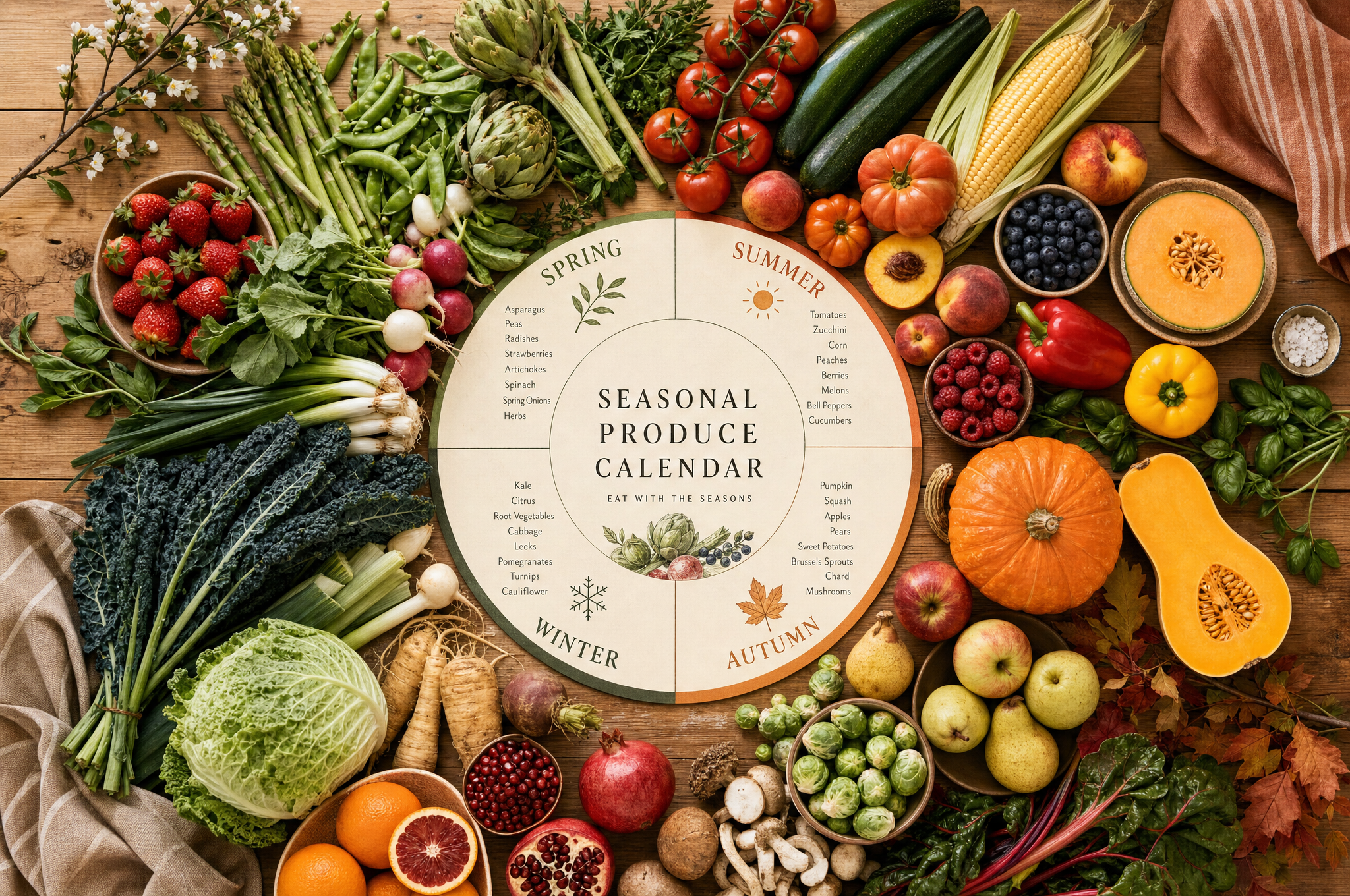
Strawberries in January cost $5.99 for a small container. Strawberries in June cost $1.99 for a larger one. Same fruit, same store — different season, different price.
That's the produce market in a nutshell: prices are dictated by supply, and supply is dictated by what's in season locally. When fruits and vegetables are harvested in abundance, prices drop. When they're shipped from halfway across the world in refrigerated containers, prices spike.
Most shoppers buy the same produce year-round and accept whatever price the store charges. But if you shift your eating to follow the seasons — even partially — you'll save 30-50% on produce without clipping a single coupon.
Why seasonal produce is cheaper
It comes down to three factors:
- Abundance. When a crop is in peak harvest, farmers have more than they can sell. Prices drop to move volume.
- Lower transportation costs. Seasonal produce is often grown closer to you, meaning less fuel, fewer middlemen, and no expensive cold-chain shipping.
- Less spoilage. Shorter transit times mean less waste, which means lower prices passed to consumers.
As a bonus, seasonal produce tastes better and has higher nutritional value — produce shipped long distances is often picked before it's ripe and loses nutrients in transit.
The month-by-month guide
Here's what to buy each month for maximum savings. These are general guidelines for North America — your local farmers market may vary by a few weeks depending on your climate zone.
January
- Cheapest: Citrus (oranges, grapefruit, lemons), kale, Brussels sprouts, cabbage, sweet potatoes, carrots, parsnips
- Avoid: Berries, asparagus, stone fruit (expensive imports)
February
- Cheapest: Citrus continues, beets, leeks, broccoli, cauliflower
- Avoid: Tomatoes, peppers (prices peak midwinter)
March
- Cheapest: Asparagus (prices start dropping), peas, spinach, radishes, artichokes
- Avoid: Apples (storage crop is getting old), corn
April
- Cheapest: Asparagus (peak season — buy extra and freeze), strawberries (starting), lettuce, peas, spring onions
- Avoid: Grapes, melons
May
- Cheapest: Strawberries (peak), cherries (late May), asparagus, zucchini, green beans, apricots
- Avoid: Citrus (prices rising as season ends)
June
- Cheapest: Strawberries, cherries (peak), blueberries, peaches, corn, tomatoes, zucchini, cucumbers
- Avoid: Brussels sprouts, cranberries
July
- Cheapest: Blueberries, raspberries, peaches, plums, watermelon, cantaloupe, corn, tomatoes, peppers, eggplant
- Stock up: Berries for freezing, peaches for canning
August
- Cheapest: Everything in July plus late-summer tomatoes, melons, figs, grapes (starting), apples (early varieties)
- Avoid: Asparagus, peas (season over)
September
- Cheapest: Apples (peak), pears, grapes (peak), butternut squash, acorn squash, pumpkins, sweet potatoes, cranberries (late Sept)
- Avoid: Stone fruit (season ending, prices rising)
October
- Cheapest: Apples, pears, squash (all varieties), sweet potatoes, cranberries, pomegranates
- Stock up: Winter squash stores for months in a cool, dry place
November
- Cheapest: Sweet potatoes (Thanksgiving sales), cranberries, Brussels sprouts, persimmons, citrus (starting)
- Avoid: Berries, asparagus
December
- Cheapest: Citrus (peak — especially navel oranges and grapefruit), pomegranates, kale, cabbage, root vegetables
- Avoid: Tomatoes, corn, stone fruit
Prices for seasonal produce can be 50-70% lower than out-of-season prices. A pint of blueberries costs $5-6 in March and $1.50-2 in July. Plan accordingly.
How to take advantage
Knowing the calendar is one thing; using it is another. Here are the practical strategies:
- Meal plan around seasonal produce. When you plan your weekly meals, start with what's in season and cheap, then build around it. In July, plan meals around tomatoes, corn, and zucchini. In January, plan around citrus, kale, and root vegetables.
- Buy extra at peak season and preserve. When berries are $1.50 in July, buy 10 containers. Freeze what you can't eat fresh. Same with peaches, corn, and tomatoes.
- Shop the farmers market at the end of the day. Farmers don't want to haul produce back. Arrive 30 minutes before closing and you'll often get 20-30% discounts or volume deals.
- Learn to substitute. If a recipe calls for out-of-season asparagus, substitute in-season broccoli or green beans. The dish will be different but equally good — and much cheaper.
- Track your produce spending. Most people are shocked to learn how much they spend on produce when they buy out of season. Track it for a month, then switch to seasonal and compare.
Freezing Guide
Berries: wash, dry thoroughly, spread on a baking sheet, freeze, then transfer to bags. Peaches: peel and slice, toss with lemon juice, freeze in bags. Corn: blanch, cut off cob, freeze. Tomatoes: core and freeze whole (skins slip off when thawed). All will keep 8-12 months.
The frozen alternative
When fresh produce is out of season, frozen is often the better buy. Frozen fruits and vegetables are picked at peak ripeness and flash-frozen, locking in nutrients. A bag of frozen blueberries in January costs $3-4 and contains the same amount as $12 worth of fresh.
For smoothies, baking, and cooking, frozen is virtually indistinguishable from fresh — and significantly cheaper out of season. I keep my freezer stocked with frozen berries, peas, corn, and spinach year-round.
Pair this seasonal approach with the grocery sale cycle method and you've got the foundation of a budget kitchen. When you're ready to take it further, the 30-day pantry challenge is a great way to use up what you've stocked.