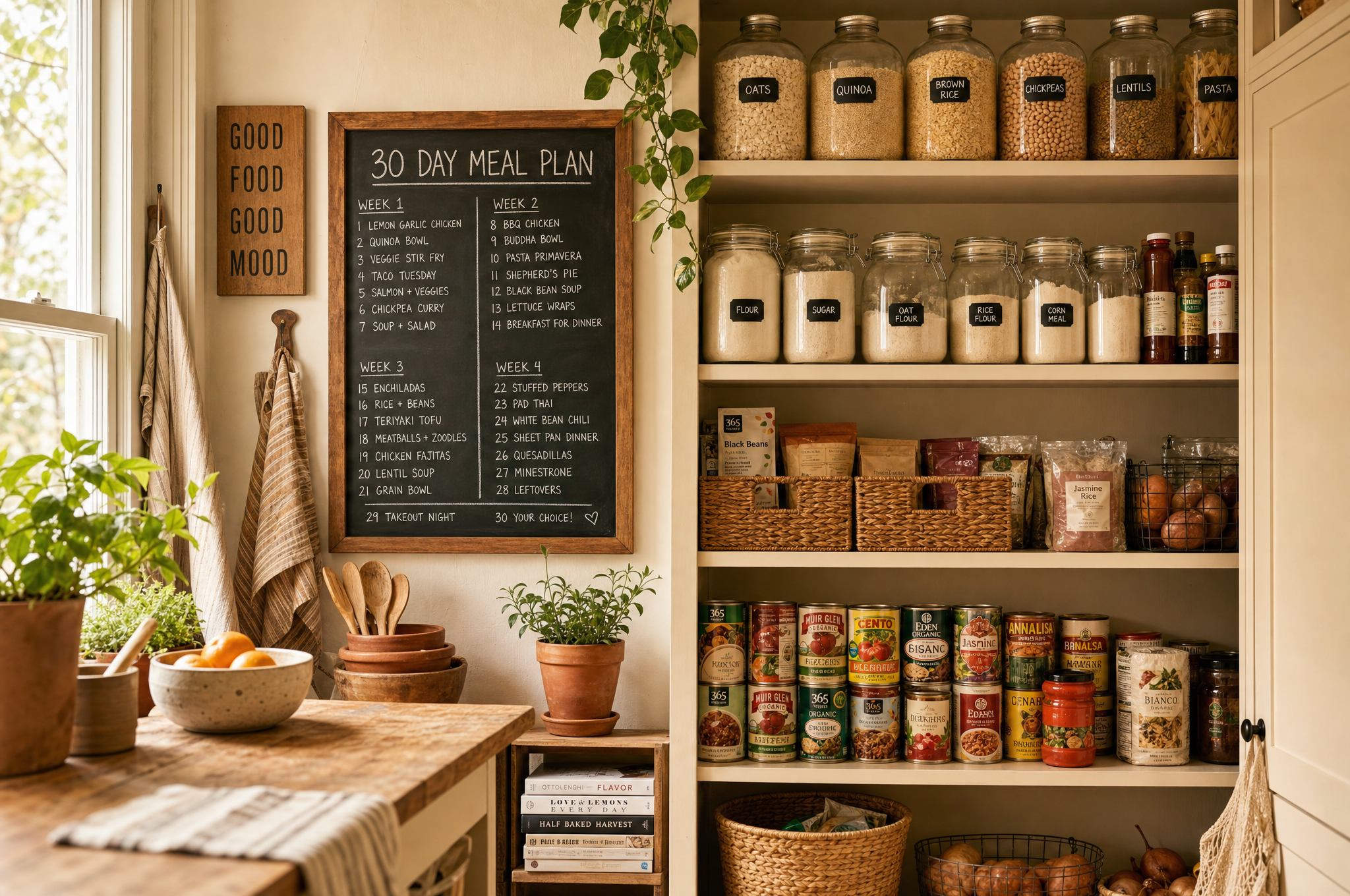
Day one of my first pantry challenge, I opened the pantry and stared at four half-empty bags of pasta, three jars of marinara sauce, a can of chickpeas that had migrated to the back, and approximately nine boxes of cereal that my kids had decided they no longer liked. The fridge had condiments but nothing you'd call a meal. The freezer had mystery containers labeled with dates from the previous spring.
I was staring at $300 worth of food I'd been ignoring while spending $600 more each month on groceries. Something was wrong with this picture.
That first pantry challenge, I spent $84 on groceries for the entire month — just fresh produce, milk, and a few staples — and ate almost entirely from what I already had. My family didn't starve. We didn't even eat poorly. We just ate differently, and I realized how much food (and money) I'd been wasting.
Here's how to run your own 30-day pantry challenge, whether your goal is saving money, clearing out storage, or resetting your cooking habits.
What is a pantry challenge?
A pantry challenge is a defined period — usually a month — during which you commit to cooking primarily from food you already have. You're not fasting, and you're not eating only rice and beans. You're shopping your own kitchen first, then buying only the minimum fresh items needed to complete meals.
The goals are threefold:
- Reduce food waste by using what you already own
- Save money by dramatically reducing grocery spending for the month
- Reset habits by breaking the cycle of buying food you don't need
Before you start: the kitchen inventory
Before day one, do a complete inventory. This is the step most people skip, and it's the most important. You can't cook from your pantry if you don't know what's in it.
Step 1: Empty and catalog
Take everything out of your pantry, fridge, and freezer. Yes, everything. Write it all down in categories:
- Proteins: Canned tuna, beans, frozen chicken, etc.
- Grains and starches: Pasta, rice, potatoes, flour, cereal
- Vegetables: Canned, frozen, and fresh
- Fruits: Canned, frozen, and fresh
- Dairy: Cheese, butter, milk (check expiration dates)
- Sauces and condiments: Marinara, soy sauce, broth, etc.
- Baking supplies: Sugar, oil, spices, yeast
Step 2: Identify gaps
After cataloging, identify what you're missing to make complete meals. Usually it's fresh produce, milk, and eggs. You'll buy only these items during the challenge.
Step 3: Check expiration dates
Sort items by expiration date. Anything expiring soon goes to the front of the queue. Most canned goods are safe well past their "best by" date — use your judgment.
The average American household throws away $1,500 worth of food annually. A pantry challenge is essentially recovering that money from your own shelves.
The 30-day plan
Week 1: Fresh and perishable first
Start with the most perishable items. Eat fresh produce, dairy, and anything in the fridge that's approaching its end. This week is about using what would otherwise go to waste.
Meal ideas: Stir-fries with leftover vegetables, omelets with cheese and herbs, pasta with fresh tomato sauce, smoothies with aging fruit and frozen berries.
Week 2: Freezer dive
Now tackle the freezer. Thaw mystery containers (label them next time!), use frozen meats, and clear out frozen vegetables that have been sitting for months.
Meal ideas: Soups and stews using frozen meats and vegetables, casseroles that combine freezer finds with pantry staples, frozen fruit crumbles for dessert.
Week 3: Pantery deep dive
This is where the real pantry cooking happens. Focus on canned goods, dry beans, grains, and the back-of-shelf items you've been ignoring.
Meal ideas: Bean-based chili, rice and bean bowls, pasta with canned tomatoes and herbs, lentil soup, chickpea curry, fried rice with frozen vegetables and eggs.
Week 4: Creative combinations
By week four, you're working with whatever's left. This is where creativity matters — combining unlikely ingredients into something edible. It's also when you start to appreciate how much food you actually had.
Meal ideas: "Kitchen sink" fried rice, soup made from remaining broth and random vegetables, baked goods using up flour and sugar, frittatas with whatever vegetables remain.
What to buy during the challenge
You're not eating nothing — you're eating primarily from your pantry and buying only fresh supplements. My monthly shopping list during a challenge looks like this:
- Milk (1 gallon per week)
- Eggs (1 dozen per week)
- Fresh produce: onions, garlic, carrots, celery, apples, bananas, and whatever's in season
- Bread (if I'm not baking)
- Any one protein that's on deep sale to replenish stock
Total: $20-30 per week, or $80-120 for the month. Compare that to a typical $400-600 monthly grocery budget, and you're saving $300-500.
Pantry challenge recipes
Here are three reliable meals that work with almost any pantry combination:
1. "Everything" soup
Sauté onions and garlic in oil. Add any vegetables (fresh, frozen, or canned — drained). Add broth or water with bouillon. Add any protein (canned beans, leftover meat, frozen chicken). Season with whatever herbs and spices you have. Simmer 30 minutes. Serve over rice or with bread. This works with literally any combination of ingredients.
2. Bean and grain bowls
Cook any grain (rice, quinoa, pasta). Top with any canned or cooked bean. Add any vegetable (roasted, sautéed, or raw). Drizzle with any sauce (soy sauce, hot sauce, vinaigrette, salsa). Add cheese if you have it. The combinations are endless and always work.
3. Pasta with whatever sauce
Cook pasta. In a separate pan, sauté any vegetables in oil or butter. Add any canned tomato product (diced, crushed, paste thinned with water). Season with Italian herbs, garlic, salt, and pepper. Add any protein (tuna, canned chicken, beans). Toss with pasta. Top with grated cheese if available.
The Pantry Challenge Mindset Shift
Most people meal-plan by deciding what to eat, then buying ingredients. During a pantry challenge, you reverse it: see what you have, then decide what to make. This skill — cooking from what's available rather than from a recipe — is the single most valuable kitchen skill for long-term food budget management.
Common challenges and how to handle them
"My family won't eat this"
Kids (and adults) resist unfamiliar meals. The fix: involve them in the process. Let them help inventory the pantry and brainstorm meals. Frame it as an adventure, not a deprivation. And keep one or two "safe" meals in rotation — even during a challenge, you can buy mac and cheese ingredients if that's what keeps everyone sane.
"I don't have enough variety"
Variety comes from seasoning, not ingredients. The same rice and beans taste completely different with cumin and lime versus curry powder versus Italian herbs. Invest in spices (they last for years) and learn to season boldly.
"I'm running out of fresh food"
This is normal by week three. Supplement with frozen and canned vegetables, which are nutritionally equivalent to fresh. Buy a small weekly produce supplement — you don't need to go fully without fresh food.
"This is boring"
Boredom is part of the process. It's also temporary. By week four, you'll have developed new cooking skills and discovered combinations you wouldn't have tried otherwise. Keep a list of meals that worked and add them to your regular rotation.
What you'll learn
Beyond the money saved (which is significant), a pantry challenge teaches you:
- How much food you waste. Most people are shocked by how much they've been throwing away.
- How to cook improvisationally. This is a skill that pays dividends forever.
- What you actually eat vs. what you buy. That giant jar of capers seemed like a good idea at the time. Now you know you'll never use it.
- How little you need to buy. After a challenge, your regular grocery list gets shorter because you stop over-buying.
Making it a habit
You don't need to do a full 30-day challenge every month. But doing one quarterly — January, April, July, October — resets your pantry, reduces waste, and saves $300-500 each time. That's $1,200-2,000 per year from four months of intentional eating.
Between challenges, use the skills you learned: check your pantry before making a grocery list, cook from what you have at least once a week, and always use perishables before they expire. These habits, combined with sale cycle shopping and a price book, form the foundation of a genuinely affordable kitchen.
That first challenge changed how I cook, how I shop, and how I think about food. It's not about deprivation — it's about intention. And on the other side of 30 days, you'll have a cleaner pantry, a fatter wallet, and a whole new set of recipes you invented yourself.